
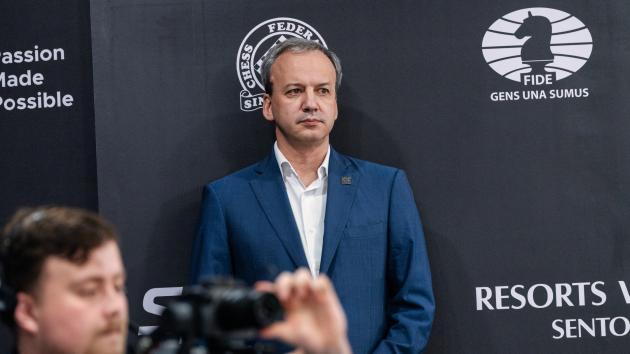

The International Chess Federation Lifts Sanctions on Russia and Belarus
After a six-hour online General Assembly, the International Chess Federation (FIDE) has approved the lifting of sanctions on Russia and Belarus, allowing their teams to return to official FIDE competitions for the first time since Russia’s invasion of Ukraine in 2022. While this decision has been celebrated in Russian media, it has faced criticism from various federations and could lead to legal challenges.
Criticism and Legal Challenges
The manner in which the vote was conducted has raised questions about the legality, governance, and potential political influence within the world governing chess body. The approval of two contradictory resolutions during the General Assembly has sparked concerns among delegates and members of the chess community.
At the heart of the issue is the debate between allowing Russian and Belarusian teams to compete under their national symbols and anthems immediately, as proposed by the Russian Chess Federation, or maintaining restrictions pending consultation with the International Olympic Committee (IOC), as suggested by the FIDE Council.
Background and Recent Developments
Since the full-scale invasion of Ukraine in February 2022, Russian and Belarusian teams have been restricted from competing under their national symbols. Athletes from these countries have been participating under the neutral FIDE flag. Over time, these restrictions have been gradually relaxed, with youth and disabled teams from Russia and Belarus now allowed to compete under the FIDE flag.
Despite these relaxations, controversies have arisen, such as the participation of an all-Russian team at the Women’s World Team Championship in Linares, Spain, which led to protests from the Ukrainian Chess Federation and the European Chess Union.
Delegates’ Perspectives
During the General Assembly, various delegates expressed differing views on the issue. While some argued for the immediate reinstatement of Russian and Belarusian teams under their national symbols, others highlighted the need for maintaining sanctions in solidarity with Ukraine and in accordance with IOC recommendations.
Engagements between delegates from different federations, such as the Kyrgyz Chess Federation and Sri Lanka’s delegate, showcased the complexity of the situation. The English Chess Federation and the Nordic Chess Federations have strongly opposed the decision and are considering further actions, including legal challenges.
Response and Future Actions
Following the General Assembly, criticism has emerged not only from external sources but also from within the FIDE Council itself. Concerns about the process, transparency, and potential legal implications have prompted discussions about next steps, including the possibility of seeking review through the Court of Arbitration for Sport (CAS).
As the chess community navigates through these challenging times, the debate around the lifting of sanctions on Russian and Belarusian teams continues to evolve. The future of international chess competitions and the integrity of FIDE’s decision-making processes remain under scrutiny.
International Chess Community Response
The decision by FIDE to lift sanctions on Russia and Belarus has reverberated across the international chess community, sparking a wide range of reactions. While some players and federations have welcomed the move as a step towards inclusivity and reconciliation, others have expressed disappointment and concern about the potential implications.
Grandmasters and leading figures in the chess world have weighed in on the decision, with opinions divided on the best path forward. Some argue that politics should be kept separate from sports, emphasizing the importance of allowing athletes to compete under their national flags regardless of geopolitical tensions. On the other hand, critics highlight the need to consider the ethical implications of welcoming teams from countries engaged in active conflicts.
Implications for Chess Diplomacy
The lifting of sanctions on Russian and Belarusian chess teams also raises questions about the role of chess in diplomacy and international relations. Historically, chess has been used as a tool for building bridges between nations and fostering dialogue, with famous matches like the 1972 Cold War showdown between Bobby Fischer and Boris Spassky symbolizing the power of the game to transcend political differences.
By allowing Russian and Belarusian players to compete under their national symbols, FIDE may be seen as promoting a form of chess diplomacy that seeks to promote unity and understanding through the game. However, the decision also risks being interpreted as a normalization of relations with countries involved in contentious conflicts, potentially undermining the values of fair play and sportsmanship that chess upholds.
Ethical Considerations and Player Perspectives
For many chess players, the lifting of sanctions on Russian and Belarusian teams raises ethical considerations about competing in events where national identity is intertwined with political actions. Players from other countries may face internal dilemmas about whether to participate in tournaments where they could potentially face opponents representing nations that are under scrutiny for their actions.
The decision also impacts the reputation and integrity of the sport, with players and fans alike questioning the implications of allowing teams from countries engaged in conflicts to participate in international competitions. Chess players may find themselves grappling with moral dilemmas as they navigate the complex intersection of sports, politics, and ethics in the wake of FIDE’s decision.
Looking Ahead: Strengthening Governance and Transparency
As the international chess community grapples with the aftermath of the decision to lift sanctions on Russia and Belarus, there is a growing consensus on the need to strengthen governance and transparency within FIDE. Calls for clearer decision-making processes, increased accountability, and a more inclusive approach to addressing geopolitical issues are gaining traction among players, federations, and stakeholders.
Moving forward, FIDE may need to revisit its policies on how to handle situations where political conflicts intersect with the world of chess. By fostering open dialogue, engaging with stakeholders from diverse backgrounds, and prioritizing the values of fairness and sportsmanship, FIDE can work towards building a stronger and more resilient international chess community.
Conclusion
The lifting of sanctions on Russian and Belarusian chess teams by FIDE marks a significant moment in the intersection of sports, politics, and diplomacy. As the chess world grapples with the implications of this decision, it is essential for players, federations, and governing bodies to engage in constructive dialogue, uphold the values of the game, and work towards a more inclusive and ethical future for international chess competitions.