

Pakistan’s Struggles Against India’s Spinners in T20 World Cup Clash
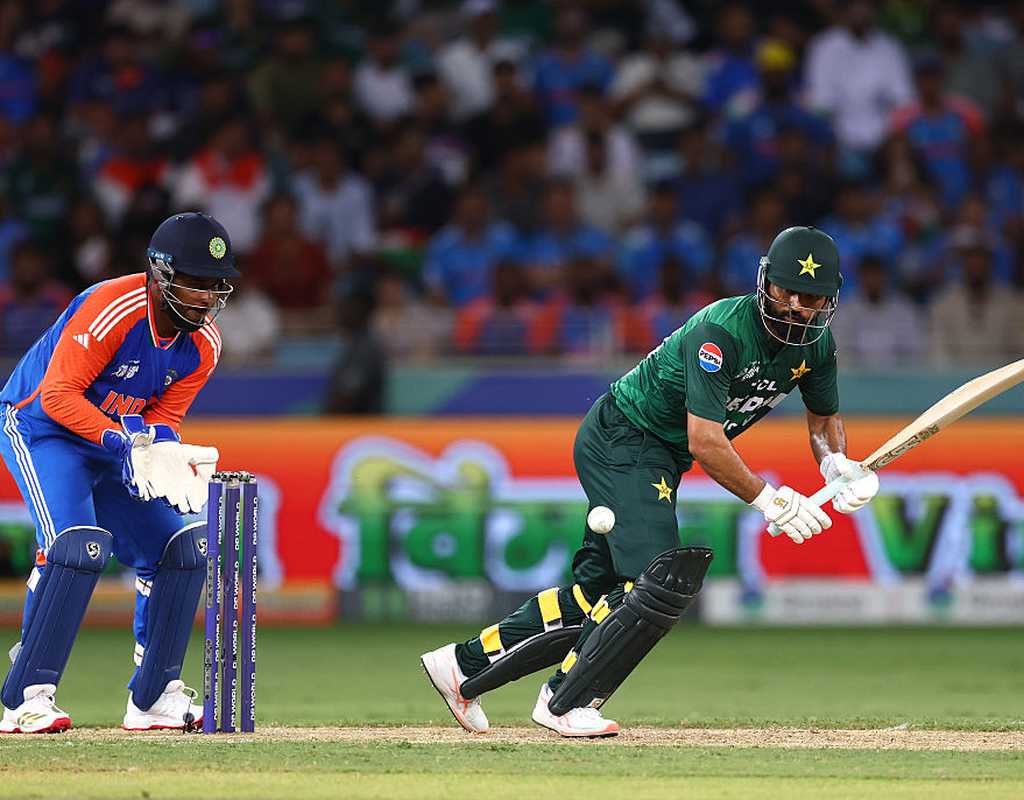
In a highly-anticipated match in the T20 World Cup, Pakistan faced a tough challenge against India’s spinners, ultimately losing six wickets for just 65 runs in 13 overs. The match provided a unique build-up and unusual post-match scenes, but what stood out was how both teams approached the game differently based on reading the conditions.
Pakistan Chooses to Bat First Despite Challenging Conditions
Salman Ali Agha, the Pakistan captain, won the toss and made a bold decision to bat first on a fresh pitch in Dubai. This choice came despite statistics showing that Full Member teams had struggled to win night games after opting to bat first in the past. However, head coach Mike Hesson shed light on the rationale behind Pakistan’s decision.
“Not so much recent history but certainly longer term history, it does [make sense],” Hesson explained. “I guess over the last six games and even throughout the whole tri-series, sides won chasing. [But] there’s not as much dew as there has been in the past, so dew’s not really a factor.”
Despite their strategy, Pakistan’s batters found it challenging to score against India’s spinners as the match progressed. The ball became difficult to put away, leading to a series of dismissals and a lack of momentum for Pakistan’s innings.
India’s Spinners Shine in the Match
India’s captain, Suryakumar Yadav, credited his team’s spinners for their remarkable performance in restricting Pakistan’s batting lineup. Nearly half of the balls faced by Pakistan were dot balls, showcasing the effectiveness of India’s spin trio.
“They are working hard, you can see it in their practice, they want to prepare really well,” Suryakumar praised his spinners. “And it’s good to see all the three spinners firing and very well supported by Hardik and Bumrah.”
Looking Ahead for Pakistan
Despite the defeat, Pakistan’s head coach remains optimistic about the team’s prospects in the tournament. Hesson emphasized the need to learn from the loss and focus on areas of improvement, particularly in batting and bowling performances.
“Look, we’re not far off. We were soundly beaten today and we’ll certainly go away and look at that but we’re still very much in this tournament,” Hesson expressed.
Conclusion
As the T20 World Cup continues, Pakistan will have the opportunity to regroup and come back stronger in their upcoming matches. The clash against India highlighted the challenges of facing quality spin bowling, and Pakistan will need to refine their strategies to overcome such obstacles in the future.
With a focus on improving their batting and bowling performances, Pakistan aims to bounce back in the tournament and showcase their competitive spirit against formidable opponents.
Analyzing Pakistan’s Struggles Against India’s Spinners
The match between Pakistan and India in the T20 World Cup showcased the importance of spin bowling in T20 cricket. Spinners have often proven to be game-changers in limited-overs cricket, especially in subcontinent conditions where pitches tend to offer assistance to slow bowlers.
India’s spin trio of Varun Chakravarthy, Ravindra Jadeja, and Rahul Chahar exploited the conditions well, making it difficult for Pakistan’s batsmen to score freely. The slow nature of the pitch played into the hands of India’s spinners, as they varied their pace and used the conditions to their advantage.
The Impact of Toss and Decision-making
The decision to bat first after winning the toss is always a strategic one in cricket. While Pakistan opted to bat first in the game against India, it was evident that the conditions favored the spinners as the match progressed. This highlighted the importance of adaptability in T20 cricket, where teams need to read the conditions quickly and adjust their game plan accordingly.
Going forward, Pakistan may need to reassess their approach to batting first in similar conditions and consider the strengths of their opposition’s bowling attack. Understanding the strengths and weaknesses of the opposition’s bowlers can be crucial in determining the best approach to take in a T20 match.
The Role of Coaching and Preparation
Coaching and preparation play a significant role in a team’s performance in high-pressure matches like the T20 World Cup. Pakistan’s head coach, Mike Hesson, emphasized the need for learning from the loss and focusing on areas of improvement. This reflective approach is essential in guiding the team towards success in future matches.
Working on specific skills like playing spin bowling, rotating strike, and building partnerships will be crucial for Pakistan in their upcoming games. Additionally, the coaching staff can analyze the opposition’s strengths and weaknesses to formulate effective strategies that cater to the team’s strengths.
Looking Ahead for Pakistan in the Tournament
Despite the setback against India, Pakistan has the talent and potential to bounce back in the T20 World Cup. The team’s resilience and determination will be tested in the remaining matches, where they will face different challenges and opponents.
Adapting to varying conditions, improving execution under pressure, and maintaining a positive attitude will be key for Pakistan in their quest for success in the tournament. With a strong focus on learning from each match and constantly evolving, Pakistan has the opportunity to make a mark in the T20 World Cup.
Conclusion
As Pakistan navigates through the T20 World Cup, the lessons learned from the match against India will be invaluable in shaping their approach in future games. Adapting to different bowling attacks, understanding pitch conditions, and executing game plans effectively will be crucial for Pakistan’s success in the tournament.
With a blend of experienced players and emerging talent, Pakistan has the potential to overcome challenges and make a strong statement in the T20 World Cup. By refining their strategies, honing their skills, and maintaining a positive mindset, Pakistan can turn their struggles into strengths and compete at the highest level of T20 cricket.