
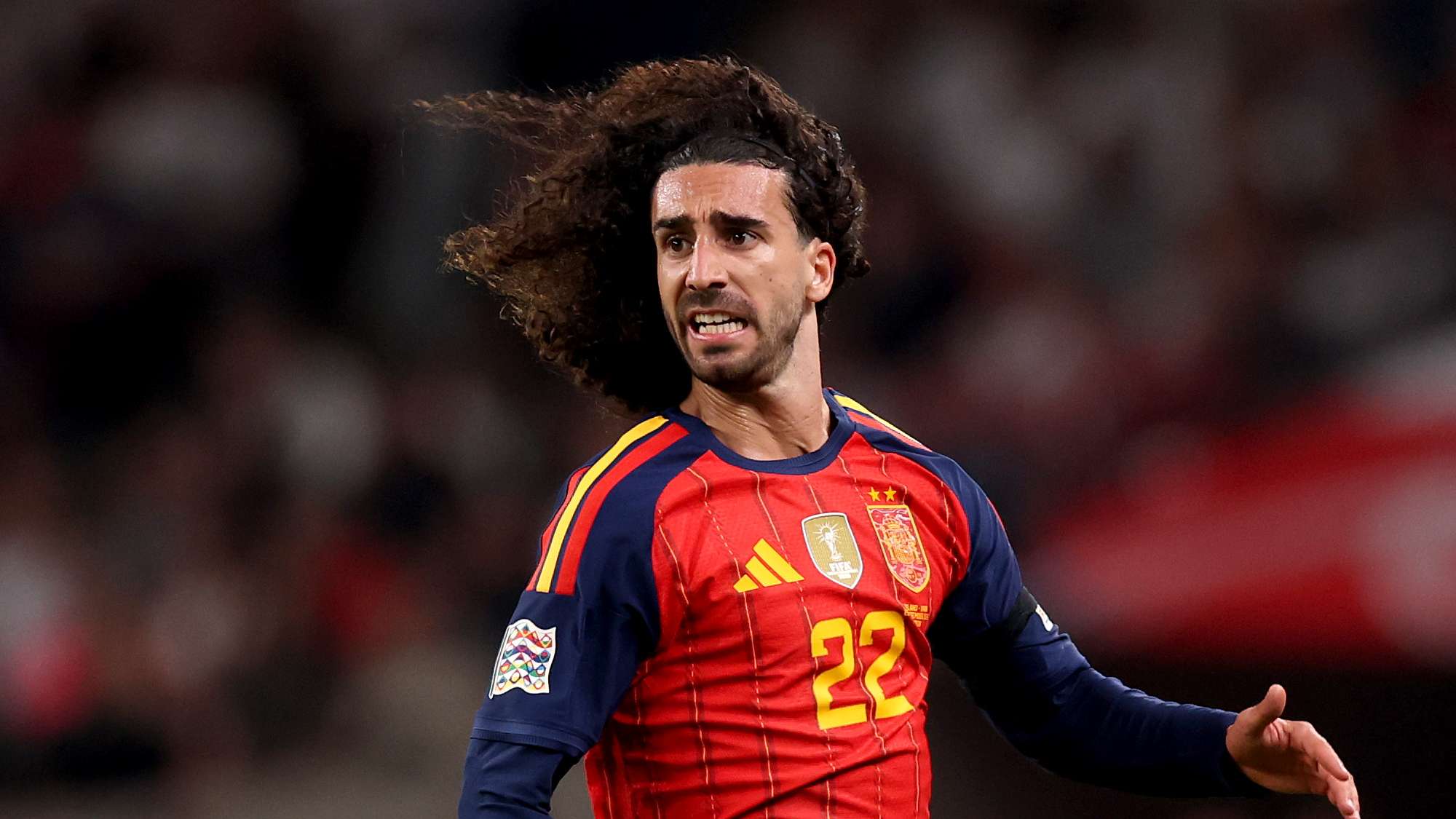

Luis de la Fuente’s Bold Statement Sparks Tactical Debate in Football Community
In the world of football, strategic decisions and player performances often ignite lively discussions among fans, analysts, and experts alike. Recently, a statement by Spain’s national team coach Luis de la Fuente has stirred a significant debate about player development, tactical adaptability, and the contrasting environments faced by footballers at club and international levels. Specifically, de la Fuente’s comments about defender Marc Cucurella have captured widespread attention, prompting fans and pundits to analyze the underlying implications for both the player’s future and Spain’s tactical approach.
De la Fuente’s Surprising Praise for Cucurella’s International Form
Following Spain’s impressive 4-1 victory over Croatia, Luis de la Fuente was quick to highlight the exceptional performance of Marc Cucurella, a player who has experienced a rollercoaster ride at the club level, particularly during his stint with Real Madrid. De la Fuente’s remarks suggest that Cucurella has found new heights with the Spanish national team—levels he seemingly struggles to reach at the club level, especially with Real Madrid, where he has faced criticism and inconsistent playing time.
“Cucurella is playing at a different level with us,” de la Fuente stated confidently during the post-match press conference. “He’s demonstrating qualities and a tactical understanding that, frankly, he has not been able to showcase at club level, particularly with Real Madrid. With the national team, he’s shown that he can adapt, excel, and contribute significantly to our success.”
Understanding the Context: Cucurella’s Club vs. International Performance
This statement naturally raises questions about the contrasting performances of Cucurella at club and international levels. At club level, especially during his time at Chelsea and now at Real Madrid, the 25-year-old defender has faced challenges in securing a starting role and maintaining consistent form. Critics have pointed out moments of vulnerability in his defensive positioning, decision-making under pressure, and overall tactical discipline—factors that have hampered his reputation among some fans and pundits.
However, at the international stage, Cucurella has shown remarkable resilience and adaptability. His performances against Croatia showcased a player who is confident, tactically aware, and capable of executing complex defensive and offensive roles within Spain’s system. His versatility in playing as both a left-back and wing-back has been instrumental in Spain’s attacking fluidity and defensive solidity during recent fixtures.
The Tactical Environment: Club vs. Country
So, why does Cucurella seem to thrive more with Spain than with Real Madrid? The answer lies in the different tactical environments and coaching philosophies at club and international levels. At Real Madrid, the intense pressure to deliver immediate results, combined with a highly competitive squad and tactical demands, can sometimes hinder a player’s ability to express themselves fully. The Madrid setup often emphasizes structured defensive organization and possession-based attacking plays, which may not always suit Cucurella’s style of play.
In contrast, Spain’s national team, under de la Fuente’s guidance, has adopted a more flexible and attacking-oriented approach. The tactical system allows players like Cucurella to showcase their offensive instincts and positional versatility. The less congested schedule and a focus on player development also give Cucurella more room to experiment and adapt without the relentless scrutiny faced at club level.
Implications for Football Prediction and Player Development
This case study of Cucurella offers valuable insights into how tactical environments influence player performance—an important consideration for football prediction models and talent development strategies. Analysts predicting future success for football players must consider not only individual skill but also the context in which they perform. A player’s ability to adapt to different tactical setups can significantly impact their career trajectory and team effectiveness.
Moreover, de la Fuente’s comments underscore the importance of international experience in player development. When players are given the opportunity to perform in a different tactical environment, they often gain new perspectives, confidence, and skills that can translate into club success. This dynamic is especially relevant for football prediction models that aim to forecast player performance and team outcomes based on various variables including coaching style, team chemistry, and tactical flexibility.
Broader Impact on Spanish Football and Future Predictions
Spain’s recent performances, highlighted by impressive wins like the 4-1 victory over Croatia, suggest a strategic evolution under de la Fuente. The coach’s willingness to praise and trust players like Cucurella indicates a shift towards a more adaptable and attacking style of football—one that could yield promising results in upcoming tournaments such as the UEFA European Championship or World Cup qualifiers.
For football enthusiasts and bettors interested in prediction, this development signals a potential rise in Spain’s competitive edge. The tactical flexibility demonstrated by players like Cucurella, combined with a cohesive team strategy, could make Spain a formidable opponent on the international stage. Future predictions should factor in these evolving tactical nuances and individual player performances when assessing Spain’s chances in major tournaments.
Conclusion: A Catalyst for Tactical Innovation and Player Growth
In summary, Luis de la Fuente’s praise for Marc Cucurella’s international form has sparked a broader conversation about the importance of tactical environments in football development. The contrast between club and national team performances highlights the need for a nuanced understanding of player potential and the influence of coaching philosophies. As football prediction models become more sophisticated, incorporating these insights will be crucial for accurate forecasts and strategic planning.
Ultimately, this scenario exemplifies how a player’s environment can unlock hidden potential, shaping the future of football prediction, player development, and tactical innovation. Fans, analysts, and clubs alike should pay close attention to these evolving dynamics, which continue to redefine the beautiful game’s landscape.