
Javokhir Sindarov’s Rise to the World Chess Championship: A New Documentary Reveals the Story Behind the Challenger
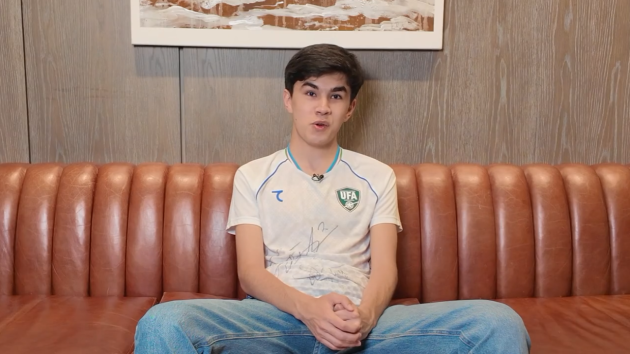
“I will give my all and try to bring the crown to Uzbekistan.” That is the promise of 20-year-old Javokhir Sindarov, whose extraordinary journey from an eight-game losing streak as a child to the world chess stage is explored in a new Chess.com documentary.
The first part of the film, released on November 20, offers an intimate look at the Uzbek grandmaster just days before his World Championship match against India’s reigning champion, Gukesh Dommaraju. At 20, both players are set to contest the youngest world championship match in chess history. Sindarov earned his place with a stunning performance in the Candidates Tournament, becoming one of the most talked-about players in modern chess.
Running approximately 54 minutes, the documentary combines previously unseen footage with interviews featuring Sindarov’s family, coaches, friends, and fellow members of Uzbekistan’s national team. It traces the sacrifices and setbacks behind his rapid rise, while the second part—planned for release after the match—will follow his training camp.
From a Difficult First Tournament to a Grandmaster Record
Sindarov began learning chess at age four. His first tournament, however, was far from a triumphant debut: he lost all eight games he played. One round included a full-point bye, and he remembers expecting a prize at the award ceremony because he had earned a point. No award came. The disappointment became an early lesson in competition—and a starting point for a career that would soon take a very different direction.
He credits his progress less to natural gifts than to sustained effort, recalling an Uzbek saying that success is “99 percent hard work, 1 percent talent.” That work helped him become a grandmaster at 12 years, 10 months, and five days, making him the sixth-youngest player to achieve the title. The record places him among a remarkable generation of young chess talents, alongside players such as Abhimanyu Mishra, Faustino Oro, Sergey Karjakin, Gukesh, and fellow Uzbek Nodirbek Abdusattorov.
The documentary’s account also emphasizes that elite chess development is rarely a solo achievement. Sindarov’s relatives made significant sacrifices to support his training and tournament schedule, while teachers and coaches helped him turn early promise into consistent progress. His grandfather jokes that he gave up his career as a judge and prospector to devote himself to Javokhir—and says the results have shown that the decision was worthwhile.
A Fierce Competitor On and Off the Chessboard
One of the film’s lighter opening scenes shows Sindarov playing Counter-Strike with his second, grandmaster Peter Leko. The world-class chess player estimates that his video-game ability is around a 2100 rating and says he might consider streaming the game later in life. The scene offers a glimpse of Sindarov away from tournament pressure, but also reveals a familiar trait: he likes to compete.
“When we are playing even some friendly games, we are playing like it’s a World Cup Final!” he says of his family. That intensity, the documentary suggests, is part of what drives him through the demanding preparation required at the highest level of chess. Yet his journey has included moments when confidence mattered as much as calculation.
The COVID-19 lockdown became a turning point. Sindarov says he emerged with a renewed hunger to prove himself—not to satisfy other people, but to answer his own doubts. “I wanted to show myself. For me, not for someone else, for myself, that I can do it.” The reflection helps explain the determination behind his later results and the composure needed to navigate a long Candidates campaign.
Uzbek Chess’s Growing Influence
Sindarov’s rise is also part of a broader story: Uzbekistan’s growing presence in international chess. Abdusattorov, now the country’s number two after spending years at the top, recalls an early game against Sindarov. Even though Abdusattorov managed to draw, he says the young player’s strength was already apparent. He believed Sindarov would become one of Uzbekistan’s strongest competitors.
That prediction has become part of a new wave of Uzbek success, with the country producing several world-class players and investing in chess education. Sindarov’s brother, Islom, founded the Sindarov Chess School, where students can see the 2025 FIDE World Cup trophy. He says he is proud both of his brother’s achievements and of being involved in chess’s growth across Uzbekistan.
Those local connections give the world title match significance beyond the two players at the board. For Uzbek fans, Sindarov represents a chance to see their country’s chess tradition reach its highest point. For younger players, his story offers a visible example of how early losses can become part of a much larger success.
Support, Belief, and a “Predator” at the Board
The documentary gathers perspectives from people who have known Sindarov at different stages of his life, including his grandfather, brother, childhood coach, schoolteacher, childhood friend, and current coach, International Master Roman Vidonyak. Their recollections show a player shaped not only by training, but also by a close circle of people who have encouraged him through both breakthroughs and difficult periods.
Vidonyak has given Sindarov several nicknames over the years, including “Sonny Boy” and “TNT.” His latest is “Predator,” a name he says reflects the challenger’s increasingly aggressive, hunting style at the chessboard. It is a vivid description of a player who can combine patience with the readiness to seize an opponent’s mistake.
Women’s chess star Bibisara Assaubayeva, who has known Sindarov for years, says one of his biggest challenges was learning to believe in himself. She recalls telling him that she had rarely seen such talent in a chess player. Their friendship, she adds, is strengthened by the fact that they understand one another well.
Assaubayeva also remembers a striking prediction. While watching the 2024 world championship match between Ding Liren and Gukesh, she told Sindarov that her intuition suggested he would play for the title two years later. He laughed at the idea at the time, saying he still had a great deal of work to do. The prediction now looks remarkably timely.
What to Expect from the World Championship Match
Those closest to Sindarov are hopeful, while recognizing the uncertainty inherent in a world title contest. Vidonyak calls his player a favorite but cautions that championship matches are often close, regardless of pre-match predictions. Abdusattorov describes it as an honor to have Sindarov as a friend and compatriot, saying his success is inspirational and wishing him victory.
Islom has already imagined how he might celebrate. If his brother wins and there is a swimming pool nearby, he says, he would like to hug him and jump in—an affectionate nod to Magnus Carlsen’s famous pool celebration after winning the world title in 2013. But, as Islom points out, Sindarov has to win first.
For Sindarov, the stakes are personal, national, and sporting. He closes the documentary by thanking Uzbek supporters for accompanying him on his journey and promising to give everything in the fight for the world chess crown. Whether he claims the title or not, his path—from a child who lost his first eight games to a challenger on chess’s biggest stage—has already become an important chapter in Uzbekistan’s rise as a chess powerhouse.