
India Defend 223 to Take 2-1 Lead in T20I Series Against West Indies
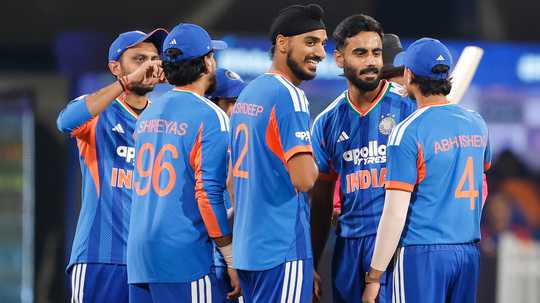
India finally turned the tables in a tour dominated by successful chases, defending a challenging total to beat West Indies by 14 runs in the third T20I at Indore’s Holkar Stadium. A blistering innings from Abhishek Sharma and a decisive spell from Arshdeep Singh helped India protect 223, giving the hosts a 2-1 lead in the five-match series.
The result was notable beyond the scoreline: it was the first time on the tour that a team had won after batting first. West Indies finished on 209 for seven, despite late hitting from Shamar Springer, as India’s bowlers held their nerve when the visitors threatened to make a match of it.
Abhishek and Kishan Power India to 223
West Indies captain Shai Hope chose to bowl after winning the toss, continuing a strategy that had served his side well. The decision appeared reasonable given the series’ chase-heavy trend and Holkar Stadium’s short square boundaries, which measure around 63 metres. But unlike in Ranchi, heavy dew did not become a major factor, allowing India’s bowlers to grip the ball and execute their plans later in the evening.
India began cautiously. Sanju Samson was dismissed for three, mistiming a fast delivery from Shamar Joseph to mid-wicket, and the opening overs offered little boundary action. The innings changed dramatically once Abhishek Sharma and Ishan Kishan found their rhythm.
Abhishek attacked Roston Chase in the third over, striking a four and two sixes, while Kishan welcomed Keemo Paul with three boundaries. The pair accelerated so quickly that India reached 87 for one at the end of the Powerplay. Abhishek brought up his half-century from just 18 balls, setting the tone for one of the most explosive passages of the innings.
The second-wicket partnership produced 108 runs from only 40 deliveries, at a remarkable rate of 16.2 runs per over. It was India’s fastest century stand in men’s T20 internationals, and it gave the home side a platform that briefly looked capable of taking the total well beyond 230.
West Indies Break Through in a Sudden Collapse
Chase, however, changed the momentum with a clever spell. He first removed Kishan for 37, drawing him out of his crease with a flatter, wider delivery and completing the stumping. Three balls later, Shreyas Iyer was trapped lbw for one after missing a slog.
Abhishek’s innings ended in the next over when he top-edged a pull and was caught by Shamar Springer. India had lost three wickets for just nine runs in the space of 10 deliveries, turning a position of control into a rebuilding challenge.
Naman Dhir briefly lifted the scoring rate with a six against Gudakesh Motie but was caught at long-off soon afterwards. India then lost further momentum through a mix of well-directed bowling and costly communication errors. Tilak Varma was run out for 28 after he and Axar Patel mistakenly thought the ball had reached the boundary and paused to celebrate mid-pitch. Axar was also run out two overs later, leaving India to piece together a competitive finish.
Nitish Kumar Reddy contributed 21 before falling to a leg-side delivery, while Prince Yadav struck three fours in the final over, including an inventive scoop over Hope. India closed on 223, a strong total but not an unassailable one on a ground known for high-scoring cricket.
Arshdeep Singh Leads India’s Bowling Response
Before the West Indies innings, Abhishek suggested that the surface rewarded bowlers who made batters wait for the ball rather than offering easy pace and length. India’s attack followed that assessment closely, using disciplined lines and pace variations to prevent the visitors from matching the hosts’ explosive Powerplay.
Mayank Yadav began with a tight two-run over, while Arshdeep Singh found movement back into the right-handers. The left-arm seamer broke through by bowling Hope, giving India an early opening. West Indies reached 54 for one after six overs—respectable, but well behind India’s 87 for one at the same stage.
Shimron Hetmyer offered the visitors their most aggressive early response. Dropped on five by Abhishek at short third, he made the most of the reprieve, scoring 43 from 26 balls and striking boundaries against Arshdeep. Naman Dhir ended the threat by bowling Hetmyer shortly after being hit for six.
At the other end, Kamil Pooran struggled to time the ball before suddenly breaking free in the 11th over, taking three sixes from Naman. He attempted another big hit but picked out Arshdeep in the deep, departing for 42. That wicket left West Indies needing a major contribution from Sherfane Rutherford, who had caused India problems in Ranchi.
Late West Indies Surge Falls Short
Rutherford and Springer added 46 runs, but the asking rate continued to rise. Nitish removed Sampson, and with West Indies requiring 65 from the final four overs, India had the opening it needed. Arshdeep returned and delivered the decisive blow, dismissing both Paul and Rutherford in the same over.
Springer kept fighting and struck three sixes from Axar Patel in the final over. Yet the equation had already become too steep: West Indies needed 37 from six balls, and the late fireworks could not change the result. The visitors ended on 209 for seven, 14 runs short.
What the Result Means for the Series
India’s victory offers a useful reminder that a large total is not only about power hitting. The hosts benefited from Abhishek’s extraordinary start, but their bowlers ultimately won the match by controlling the pace of the chase and taking wickets at key moments. Arshdeep’s three-for-44 was central, while Naman’s two wickets helped disrupt West Indies’ middle order.
For West Indies, the innings showed both the threat and the difficulty of chasing a steep target. Hetmyer, Pooran and Springer all produced important bursts, but the visitors lost wickets just as partnerships began to build. Against a total of 223, those interruptions left too much work for the lower order.
The series now stands at 2-1 to India, with two matches remaining. Any cricket prediction for the next T20I must account for the contrasting lessons from this game: West Indies have the hitting power to chase aggressively, but India have shown they can defend a total when conditions favour their bowlers. The next contest could hinge on whether the Caribbean side can preserve wickets through the middle overs—or whether India’s attack can once again turn pressure into breakthroughs.
Brief score: India 223 in 20 overs (Abhishek Sharma 69, Ishan Kishan 37; Roston Chase 2-38, Shamar Springer 2-50, Shamar Joseph 2-54) beat West Indies 209-7 in 20 overs (Shimron Hetmyer 43, Kamil Pooran 42, Shamar Springer 35 not out; Arshdeep Singh 3-44, Naman Dhir 2-39) by 14 runs.