
Afghanistan’s Tri-Series Triumph Highlights a Team Growing in Confidence
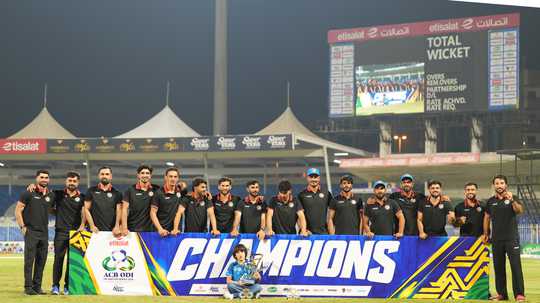
Afghanistan’s unbeaten run to the tri-series title in Sharjah offered more than a trophy celebration. For head coach Richard Pybus, the campaign was evidence that his players are becoming more accountable, the squad is gaining depth and the team is learning to adapt to demanding conditions. Afghanistan capped a flawless tournament by beating Zimbabwe by seven wickets in the final, completing three victories in five days despite the heat and humidity.
The result continued a strong stretch for Afghanistan, who had arrived in Sharjah after a positive series in Ireland. They opened the tri-series with a commanding 158-run win over Zimbabwe, then defeated Bangladesh by seven wickets in the group stage. Their final victory over Zimbabwe confirmed their dominance and gave the team another encouraging milestone as it builds toward future international challenges.
Responsibility and consistency drive Afghanistan’s progress
Pybus described the post-match atmosphere as one of a “happy dressing room,” but his satisfaction extended beyond the results. He was particularly pleased to see players take ownership of their roles rather than relying on teammates to repair mistakes or fill gaps in execution.
That sense of responsibility can be crucial in a busy tournament, where players have little time to recover between matches. Afghanistan had to manage physical demands as well as tactical adjustments, and their ability to deliver three wins in a short period suggested a side developing greater composure and consistency.
“The side’s in a good place,” Pybus said after the final, pointing to the team’s recent performances and its growing depth. He said Afghanistan are working toward becoming a side capable of competing in different conditions around the world, rather than relying on familiar surroundings or a small group of key performers.
For supporters following cricket, that ambition is significant. Teams that can adjust to changing pitches, weather and opposition strategies are better equipped to sustain success across a packed international schedule. Afghanistan’s Sharjah campaign provided useful evidence of progress, although the coach made clear that development remains an ongoing process.
More opportunities against leading teams remain a priority
Pybus also highlighted a challenge facing Afghanistan: the need for more regular cricket against the strongest international sides. He said consistent exposure to top-level opposition is important for the team’s growth, helping players test their skills against varied strategies and higher levels of pressure.
At the same time, he was careful not to diminish the quality of the tri-series opposition. Bangladesh, he noted, are a dangerous team, while Zimbabwe had already demonstrated their ability by beating Bangladesh and producing a comprehensive performance during the tournament. Afghanistan’s clean sweep therefore represented a meaningful achievement, not simply a favourable run of results.
More high-profile fixtures could help Afghanistan build on this foundation. Such matches would give emerging players a chance to develop, while allowing established performers to refine their decision-making in difficult situations. In that context, the Sharjah title serves both as a reward for current progress and as a platform for future goals.
Rahmat Shah’s calm leadership and strong batting
Captain Rahmat Shah earned particular praise from Pybus for the way he leads. The coach described him as calm and assured, with a quiet authority that encourages players to contribute. Rather than making leadership a one-way conversation, Rahmat invites input from senior teammates and involves the wider squad in planning, preparation and on-field discussions.
That inclusive approach appears to have helped create a positive team environment. A captain who listens can draw on the experience and perspective of different players, which is especially valuable for a side seeking greater depth. It can also strengthen collective responsibility: when players have a voice in preparation, they are more likely to feel invested in the team’s plans.
Pybus stressed that leadership is also demonstrated through performance, and Rahmat has delivered with the bat. The coach praised the captain’s consistency across formats, including his impressive efforts in Ireland and in the Test match before the tri-series. Rahmat’s century and fifty in that Test, Pybus said, deserved greater recognition, even though other performances and the team’s overall result drew much of the attention.
His contribution in the tri-series added another layer to an already strong run. A captain who can guide a team tactically while also making substantial runs gives Afghanistan an important source of stability. That combination can prove valuable in close matches, where a dependable batter may help turn a promising position into a winning one.
Seven consecutive ODI wins create an encouraging outlook
Rahmat has yet to lose an ODI as Afghanistan captain, and the team’s seven consecutive victories represent an impressive start to his leadership. Pybus cautioned that results will not always be so favourable, but said he had no doubt Rahmat would continue to lead in a positive and inspiring manner.
That balanced outlook matters. A winning streak can raise expectations, but it does not guarantee future success. Afghanistan will need to keep improving their batting depth, bowling options and ability to respond when conditions or match situations turn against them. The tri-series offered encouraging signs, particularly in the way players performed their assigned roles, but tougher tests will provide a clearer measure of how far the team has progressed.
For fans searching for a cricket prediction about Afghanistan’s next chapter, the evidence points to a team with momentum, a confident captain and a growing group of players willing to take responsibility. That is not a promise of uninterrupted wins; it is a foundation on which further progress can be built.
Afghanistan’s Sharjah triumph therefore carries value beyond the final score. The side showed it could handle a demanding schedule, beat respected opposition and maintain its standards across the tournament. With Rahmat Shah’s leadership and Pybus’s focus on adaptability, Afghanistan have reason to approach upcoming challenges with confidence—while recognising that regular competition against the world’s leading teams will be essential to turning promise into lasting success.